
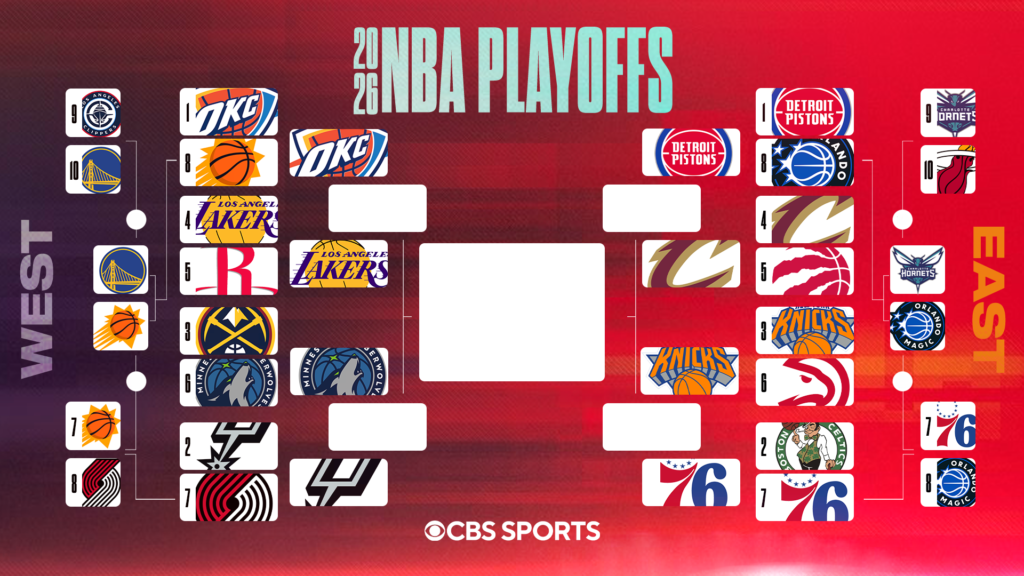
All Eight Series Final; Second Round Coverage begins May 5t.
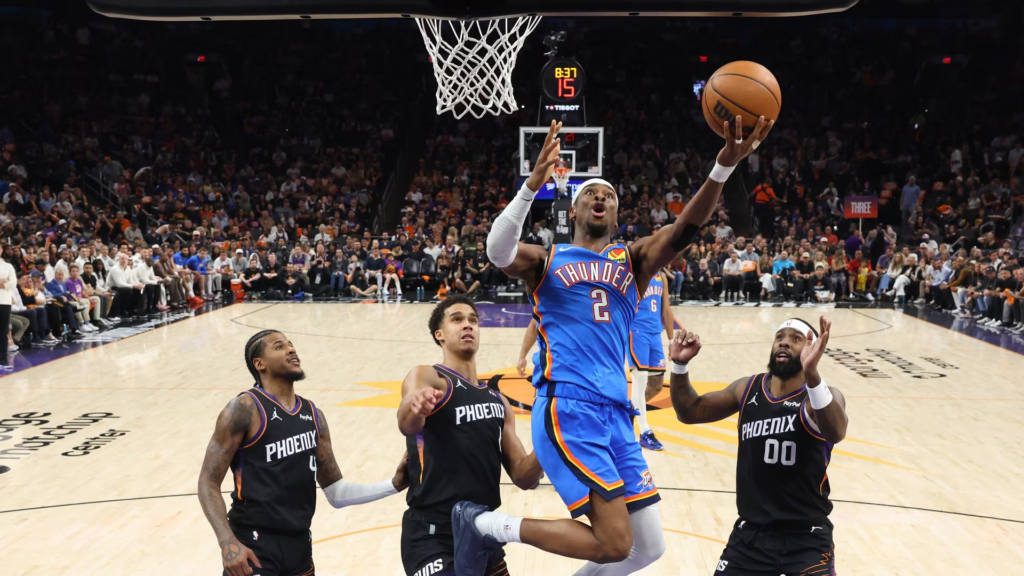
(1) Oklahoma City Thunder def. (8) Phoenix Suns — 4-0
Series scores: 84-72 | 120-107 | 121-109 | 131-122
The defending champions never broke a sweat. Oklahoma City swept the Phoenix Suns in four
games, becoming the first team to advance to the second round and extending the franchise’s
first-round winning streak to 12 consecutive games over three postseasons, the first West
team to sweep the first round in three straight years since the Showtime Lakers.
The SGA dominance: Shai Gilgeous-Alexander was the betting favorite to win his second
straight MVP award coming in, and he played like it. He scored 31 points on 10-of-17 shooting
in the Game 4 clincher, and his fourth-quarter efficiency was otherworldly, dating back to
March 17, he shot 17-of-18 from the field and 32-of-37 from the free-throw line in fourth quarters
and overtime periods across 16 games. In Game 3, he posted a career playoff-high 42 points on
15-of-18 shooting and 11-of-12 from the free-throw line, one of just seven 40-point playoff
performances in NBA history with a true shooting percentage above 90 percent.
How they contained Phoenix: The Thunder’s No. 1-ranked defense made Devin Booker its
primary assignment all series, swarming him with bodies and making it extremely difficult for him
to find clean looks. Booker averaged 21.3 points, 4.8 assists and 4.3 rebounds on 46 percent
overall shooting respectable numbers on paper — but he shot just 5-of-20 (25 percent) from
three for the entire series and the Suns never found another creator capable of consistently
punishing OKC’s attention to Booker. In the series opener, Phoenix was held to 72 points. The
Thunder also committed just 8.9 turnovers per 100 possessions across the series, which would
rank among the lowest rates for any team in any playoff series over the last 30 years of play-by-
play data. Cason Wallace and an emerging Jared McCain provided reliable secondary scoring
off the bench, and the collective depth made the Thunder impossible to gameplan against.
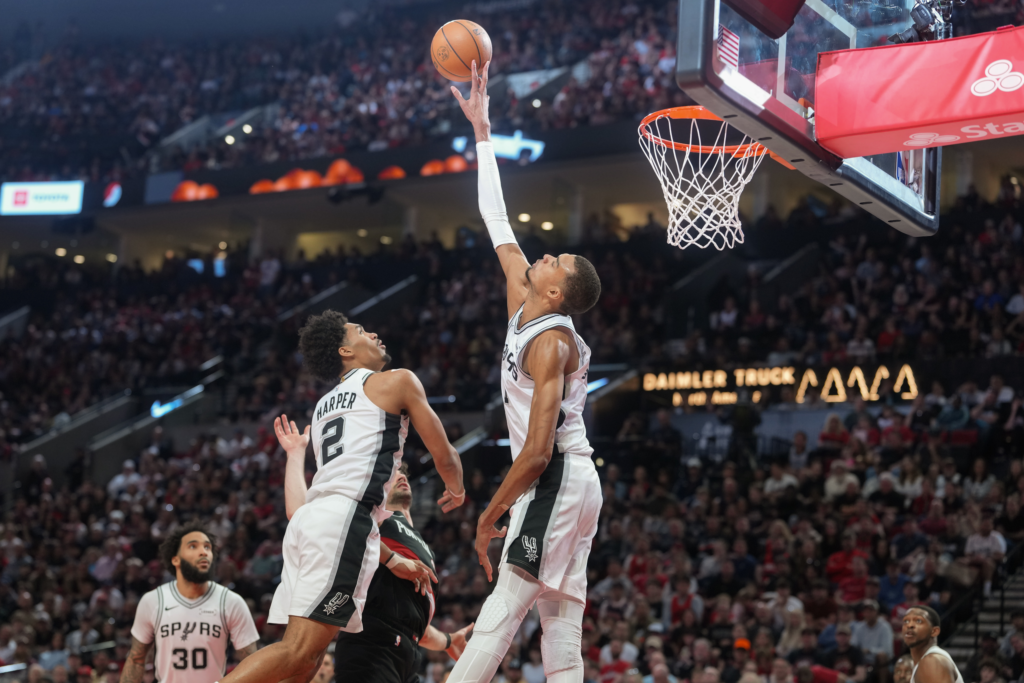
(2) San Antonio Spurs def. (7) Portland Trail Blazers — 4-1
Series scores: SAS 111-98 | POR 106-103 | SAS 120-108 | SAS 114-93 | SAS 114-95
Victor Wembanyama’s playoff arrival was everything San Antonio fans could have hoped for,
even if it came with a serious scare in the middle. The Spurs advanced to the Western Conference Semifinals for the first time since 2017 after a 4-1 series win over a scrappy
Portland squad, and Wembanyama announced himself as the most unguardable defensive
presence in the league.
Wembanyama’s debut: He scored 35 points in Game 1. A Spurs franchise record for a
playoff debut, surpassing Tim Duncan’s 32 from 1998, and his 21 first-half points set an NBA
record in the play-by-play era for the most in the opening half of a playoff debut. “It is obviously
different, but we’ve been really good in the regular season,” Wembanyama said. “So, we have
no reason to act differently or do anything different.”
The concussion scare: In Game 2, Wembanyama was fouled by Jrue Holiday and tumbled
face-first, his jaw slamming the floor. He was diagnosed with a concussion and did not return.
With their franchise player in the concussion protocol, the Spurs led by 14 points in the fourth
quarter and still lost 106-103 as Scoot Henderson scored 31 and Portland closed on an 11-2
run. San Antonio had won 76 straight postseason games when leading by 14 or more in the
fourth quarter, the streak ended that night.
The comeback and the close: Wembanyama cleared protocols and returned for Game 4 in
Portland, posting 27 points, 11 rebounds and seven blocks as the Spurs erased a 17-point
halftime deficit to win 114-93. Becoming the first team in NBA playoff history to trail by 15 or
more at halftime and win by 15 or more in the same game. He followed that with 17 points, 14
rebounds and six blocks in the clincher, making him the first player since Patrick Ewing in 1994
to post consecutive playoff double-doubles with six-plus blocks. Portland coach Tiago Splitter
said it plainly: “He can contest the 3 and the rim at the same time. He’s going to create a lot of
problems for a lot of teams for a long time.” The Trail Blazers shot just 35.1 percent from the
field and 23.4 percent from three for the series.
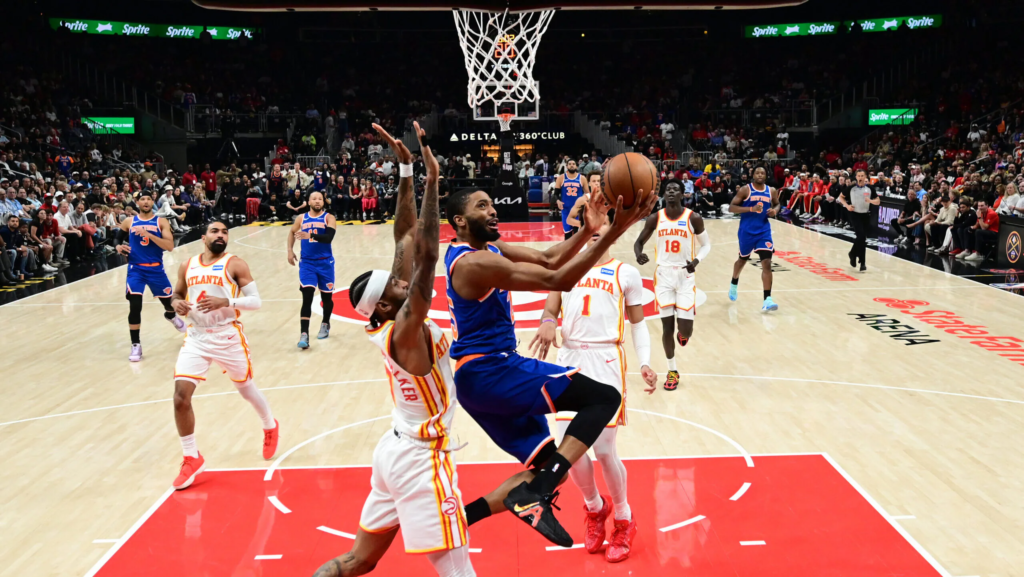
(3) New York Knicks def. (6) Atlanta Hawks — 4-2
Series scores: NYK 114-98 | ATL 107-106 | ATL 109-108 | NYK 114-98 | NYK 126-97 | NYK 140-89
A series that swung wildly before the Knicks landed a finishing blow that will be remembered for
years. After dropping back-to-back one-point games on the road to fall into a 2-1 hole, New York
closed the series on a 96-point differential across three wins, capping it with the largest halftime
lead in NBA playoff history.
The Hawks’ midseason reinvention: Atlanta had entered the season sitting as low as 10th in
the East before a flurry of deadline trades transformed them. Trae Young was shipped to
Washington for CJ McCollum and Corey Kispert. Kristaps Porzingis was moved to Golden State
for Jonathan Kuminga and Buddy Hield. The retooled roster went 20-6 after the All-Star break, best in the East, and rode that momentum into a 2-1 series lead — McCollum had 32 points in
the Game 2 upset and 109-108 theft in Game 3.
The Knicks adjust: Coach Mike Brown made a decisive tactical shift entering Game 4,
repositioning Karl-Anthony Towns as the primary playmaker from the post. KAT averaged 16.0
points, 11.7 rebounds and 8.7 assists with 2.3 steals from Game 4 through Game 6 as New
York won those three games by an average of 32.3 points. “The biggest thing is we had to
change our offense,” Brown said. “Every possession was a grind those first three games,
especially down the stretch.” Jalen Brunson scored 39 points in Game 5 on 15-of-23 shooting.
The historic Game 6: Four minutes into the decisive road game, Atlanta led 11-9. What
followed was one of the most lopsided stretches in playoff history. The Knicks went on a 74-25
run over the remainder of the half, building an 83-36 halftime advantage — the largest halftime
lead in NBA playoff history, eclipsing the previous record of 41 points. OG Anunoby scored 26
first-half points and finished with 29, seven rebounds and four steals. Anunoby was, at one
point, outscoring the entire Hawks team by himself. All 15 Knicks players scored in the 140-89
final. KAT finished with a 12-point, 11-rebound, 10-assist triple-double. The lead hit 61 at one
point, the largest in any playoff game in the play-by-play era. “We were able to get stops, run
in transition, get layups,” Brunson said. “Most importantly, it shows us what we’re capable of
defensively.”
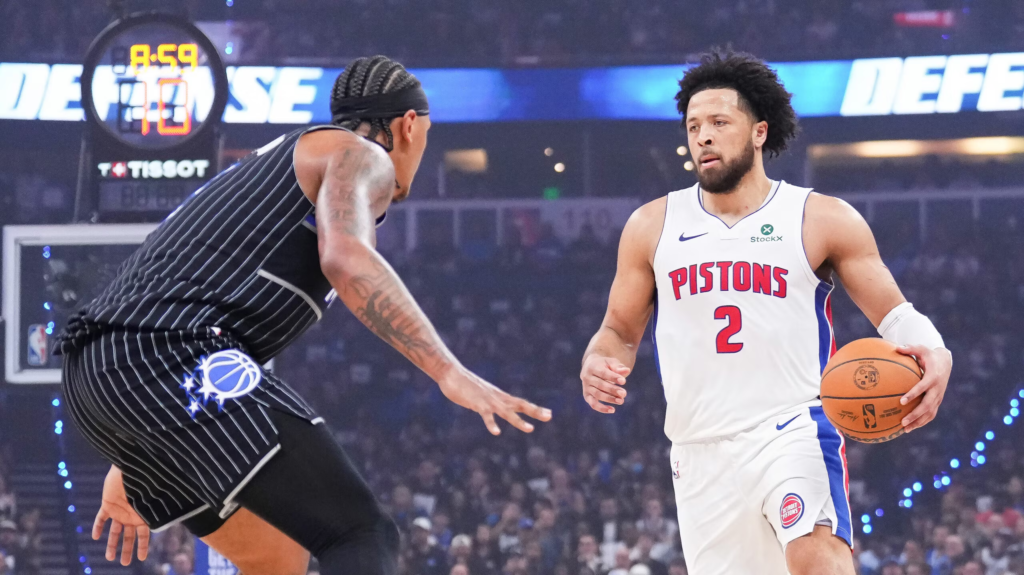
(1) Detroit Pistons def. (8) Orlando Magic — 4-3
Series scores: ORL 94-88 | ORL 113-105 | ORL 113-105 | DET 88-94 (W-ORL) | DET 116-109 | DET 93-
79 | DET 116-94
The biggest upset bid of the first round fell just short. Orlando’s eighth-seeded Magic took a 3-1
series lead over the top seed and pushed the Pistons to the absolute limit, forcing a Game 7
that Detroit won convincingly at home. It was a series defined by two elite young forwards, a
historic comeback and a franchise milestone.
Orlando’s case for the upset: The Magic won Games 1, 2 and 3 behind stifling defense and
the continued emergence of Paolo Banchero, who was the best player on the floor for stretches
of the series. The Pistons were plagued by a historic home-court curse early — their Game 1
loss extended a streak of 11 consecutive home playoff defeats, the most in NBA history — and
they looked vulnerable on both ends when Cade Cunningham was not at his best.
The 45-45 Game 5: Cunningham and Banchero each scored 45 points in Game 5, two former
No. 1 overall picks refusing to let their teams die in an elimination game. Cunningham shot efficiently and controlled the pace; Banchero attacked the rim relentlessly. Detroit survived 116-
109. The historic Game 6 collapse and comeback: Orlando appeared to be closing it out in Game
6, building a 24-point lead at one stage in Cunningham’s house. Then Cunningham happened.
He scored 24 of his 32 points in the second half, 19 in the fourth quarter alone, as Detroit
outscored the Magic 55-19 over the final 24 minutes to win 93-79 and force Game 7. He also
grabbed 10 rebounds. “These two games have given us a lot of life,” Cunningham said. “It’s
about our defense, getting up and down the floor, making it tough on guys.” Cunningham
became the first Pistons player since Isiah Thomas to post at least 30 points and 10 rebounds in
an elimination game.
Game 7 — Detroit’s dominance: The Pistons closed it decisively. Tobias Harris erupted for 17
of his 19 points in a dominant second quarter, and Detroit forced nine Magic turnovers that led
to 12 points. Cunningham finished with 32 points and 12 assists. Banchero fought to the end
with 38 points, nine rebounds and six assists but had no support — he was the only Magic
player in double figures at halftime. Detroit won 116-94 to advance to the Eastern Conference
Semifinals for the first time since 2008.
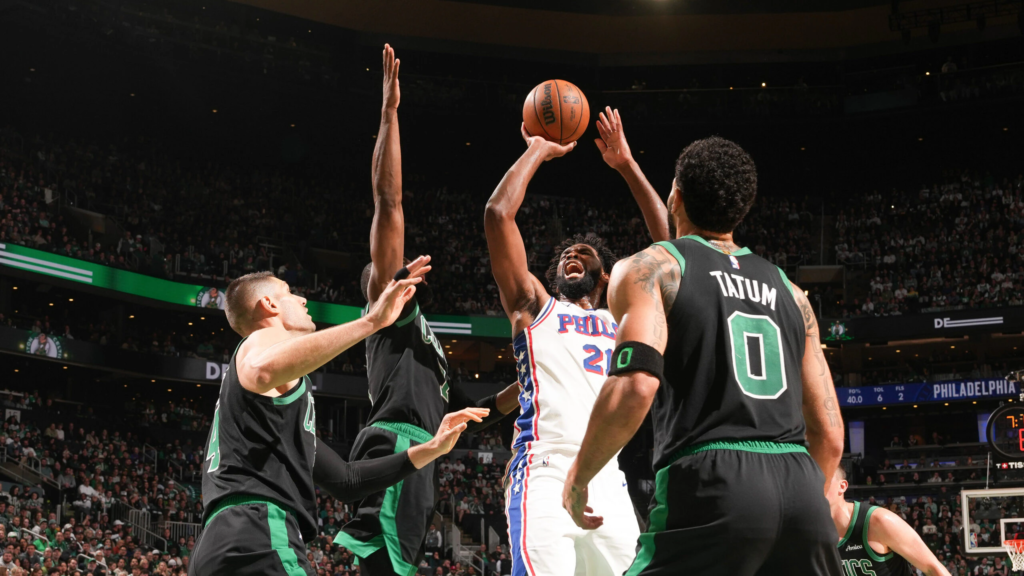
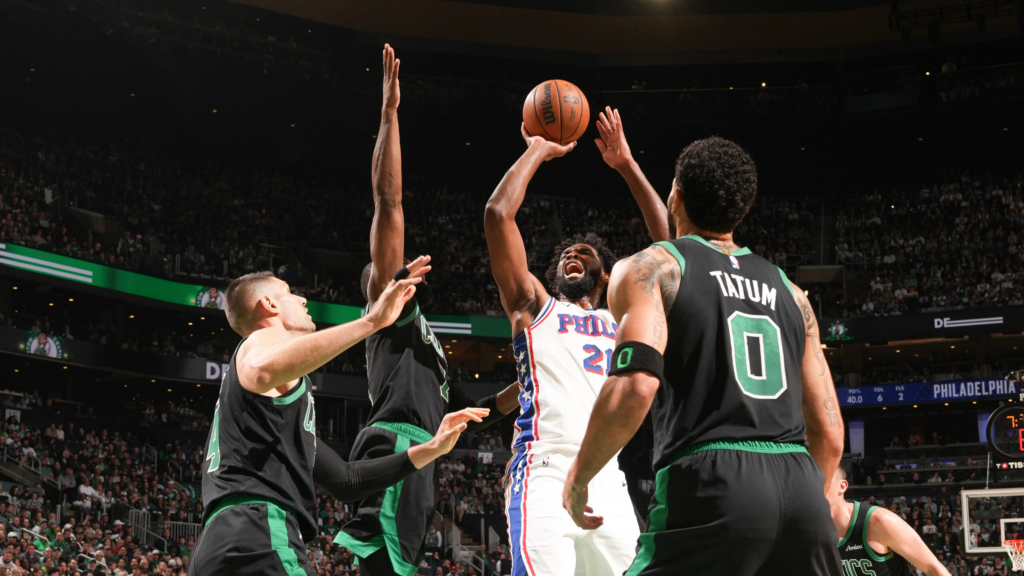
(7) Philadelphia 76ers def. (2) Boston Celtics — 4-3
Series scores: BOS 128-96 | PHI 111-97 | BOS 108-100 | BOS 128-96 | PHI 113-97 | PHI 106-93 | PHI
109-100
The most stunning result of the first round. The seventh-seeded 76ers came back from a 3-1
deficit to eliminate the second-seeded Celtics in Game 7 on the road — completing one of the
rarest comebacks in playoff history and ending a decades-long postseason curse against
Boston. The Sixers were 0-18 in series where they trailed 3-1. The Celtics were 32-0 when
holding a 3-1 lead. Both records ended Saturday night at TD Garden.
The early hole: Boston blew Philadelphia out in Games 1 and 4 by a combined 64 points. The
Celtics shot 24-of-53 from three in Game 4 (45%) and out-rebounded the Sixers 51-30. It looked
hopeless for Philadelphia, particularly because Joel Embiid had missed the first three games
recovering from an emergency appendectomy.
Embiid’s return and Philly’s run: Embiid returned for Game 4, in a loss, but came to life
from Game 5 onward, becoming the first player in NBA history to score at least 100 points in a
series despite missing the first three games. He averaged 28.0 points, 12.0 rebounds, 7.0
assists and 2.0 blocks for the series, a statistical line only Giannis Antetokounmpo has matched
in any playoff series. Maxey became the first 76er ever with back-to-back postseason games against the Celtics with 30-plus points and five-plus assists. In the last three games, the Sixers
held Boston to 40.4, 41.9 and 39.8 percent shooting from the field — the first time the Celtics
shot below 42 percent in three straight home playoff games in the same series in franchise
history.
Tatum’s injury and Game 7: The Celtics lost Jayson Tatum to left knee stiffness before Game
7, a crushing development for Boston. Joe Mazzulla overhauled his starting lineup with only
Jaylen Brown and Derrick White carrying over. Embiid led all scorers with 34 points, 12
rebounds and six assists. Maxey added 30 points, 11 rebounds and seven assists — scoring
eight of the Sixers’ last 10 points as the Celtics went ice cold with 10 consecutive missed shots
in the final five minutes. Rookie VJ Edgecombe scored 23 points, the most by a 76ers rookie in
a Game 7 ever. Brown gave Boston 33 points and White added 26, but it was not enough.
Philadelphia won 109-100 for its first playoff series win over Boston since 1982. “We’ve had this
weird swag about us all year,” Maxey said. “This confidence in that we know who we can be,
and we know who we are.”
(4) Cleveland Cavaliers def. (5) Toronto Raptors — 4-3
Series scores: CLE 115-105 | CLE 115-105 (approx.) | TOR 126-104 | TOR 93-89 | CLE 125-120 | TOR
112-110 | CLE 114-102
A grinding, evenly matched series between two teams that made each other earn every game.
The home team won all seven contests — an almost unprecedented pattern that ended with
Cleveland advancing behind a dominant performance from Jarrett Allen in Game 7.
Toronto’s surprising competitiveness: The Raptors, in the playoffs for the first time since
2022, pushed Cleveland to the limit despite entering as underdogs. Scottie Barnes was their
best player all series and delivered 24 points and nine rebounds in Game 7. RJ Barrett added Ja’Kobe Walter scored a career playoff-high 20 points in the Game 5 loss. The Raptors won
Games 3 and 4 in Cleveland, including a defensive masterpiece in Game 4.
The injury question: Scottie Barnes and Brandon Ingram both battled health issues through
the series, limiting Toronto’s ceiling in crucial moments and ultimately hampering any chance of
a comeback once Cleveland found its footing in Game 7.
Jarrett Allen’s Game 7: Allen was the difference. He tied his career playoff high with 22 points,
grabbed 19 rebounds, had three blocks, two steals and two assists — going 7-of-11 from the
field with all attempts coming at the rim. He had 14 points and 10 rebounds in the decisive third
quarter alone as Cleveland ran a 49-21 stretch over a 15-minute span to flip a nine-point deficit
into a 19-point lead. “We all looked at ourselves and decided that now was the time to do it,”Allen said. “When we rebound the ball and get stops, that just translates to the offense so muchbetter.” Donovan Mitchell added 22 points, scoring 15 of them in the second half. James Harden contributed 18 on a tough shooting night, getting 11 of his points at the free-throw line.Cleveland wins to advance to the Eastern Conference Semifinals to face the Pistons.
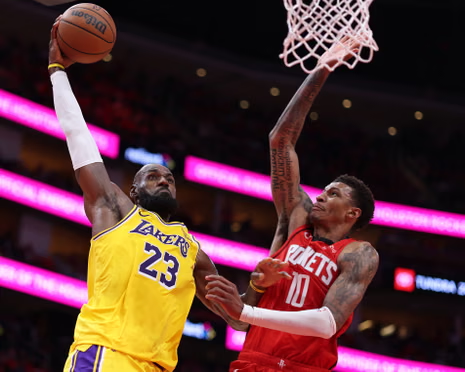
(4) Los Angeles Lakers def. (5) Houston Rockets — 4-2
Series scores: LAL 107-98 | LAL 101-94 | LAL 112-108 | HOU 115-96 | HOU 99-93 | LAL 98-78
A series that featured two major injury absences, wild three-point shooting variance and LeBron
James doing LeBron James things at 41 years old. Los Angeles advanced to the second round
for the first time since 2023 despite never having Luka Doncic, who missed the entire series
with a hamstring injury.
Durant’s absence and the early advantage: Kevin Durant sat out Game 1 with a right knee
bruise, and the Lakers jumped on Houston immediately. Luke Kennard scored a career playoff-
high 27 points in the opener. LeBron had 28 points, eight rebounds and seven assists in Game
2, with Marcus Smart adding 25 points and five triples. Durant returned for Game 2 but
struggled, just three of his 23 points came in the second half against a stifling James-led
defense, and the Lakers built a 3-1 lead before the series turned.
Houston’s fight and the shooting variance problem: Durant re-injured himself, missing
Games 3 through 6, but the Rockets’ young core refused to fold. Houston won Games 4 and 5
behind 14 made threes in the latter, going from 0-3 down to forcing a Game 6 at home. The
Lakers’ shooting collapsed in those two losses, they shot 46.1 percent from three in their first
three wins but fell to 24.5 percent in Games 4 and 5, including 7-of-27 in Game 5. LeBron was
0-of-6 from deep in that loss despite scoring 25 points. Kennard, who led the NBA in three-point
percentage during the regular season, scored one point in Game 5 after totaling 64 across the
first three games.
The closeout: Austin Reaves returned from an oblique injury in time to contribute in Game 6,
and LeBron set the tone immediately. The Lakers went on a 27-3 run in the first half to build an
18-point halftime advantage and never looked back, winning 98-78 and holding Houston to a
season-low in points. LeBron finished with 28 points. “For us to be written off a few weeks ago
and win a playoff series is a big deal,” coach JJ Redick said. The Lakers now face OKC in the
second round.
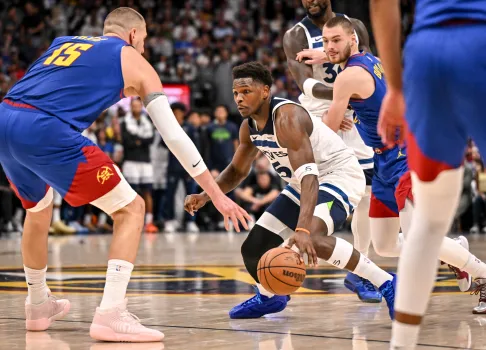
(6) Minnesota Timberwolves def. (3) Denver Nuggets — 4-2
Series scores: DEN 116-105 | MIN 119-114 | MIN 113-96 | MIN 112-96 | DEN 125-113 | MIN 110-98
Perhaps the most remarkable story of the entire first round. Minnesota eliminated Denver
despite losing Anthony Edwards (hyperextended left knee, bone bruise) and Donte DiVincenzo
(ruptured right Achilles) during Game 4, playing the final two games of the series without their
two leading scorers. The Timberwolves advanced to the conference semifinals for the second
consecutive year — matching last season’s run that saw them reach the Western Conference
Finals.
The Jokic-Gobert battle: Game 1 was a bruising, physical opener. Nikola Jokic posted 25
points, 13 rebounds and 11 assists, Jamal Murray shot 16-of-16 from the free-throw line for 30
points, and Denver won 116-105 in a game with 42 fouls. But over Games 2, 3 and 4, Rudy
Gobert — along with Jaden McDaniels — systematically neutralized Jokic, holding him to 34
percent shooting from the field and 15 percent from three. In Game 3, Gobert’s defense helped
limit the Nuggets to just 11 first-quarter points, a postseason franchise record low allowed by
Minnesota.
The Dosunmu game: Ayo Dosunmu came off the bench in Game 4 and scored 43 points on
13-of-17 shooting, going 5-of-5 from three and 12-of-12 from the free-throw line in 42 minutes —
the best performance by a reserve in 50 years, per the NBA. “Ayo was just out of this world,
man,” coach Chris Finch said. That win also produced late-game ejections for Jokic and Julius
Randle after a physical altercation.
Playing through the injury crisis: DiVincenzo went down in the opening minute of Game 4
with a torn Achilles. Edwards hyperextended his knee in the same game. When Jokic
responded with 27 points, 16 assists and 12 rebounds in Game 5 — his 23rd career playoff
triple-double, third all-time behind Magic Johnson and LeBron — most expected Denver to force
Game 7. But in Game 6, Minnesota went big. Without their starting backcourt and with
DiVincenzo, Edwards and Dosunmu all inactive, Jaden McDaniels posted 32 points and 10
rebounds and Terrence Shannon Jr. scored 24 in a surprise start. Gobert had 10 points, 13
rebounds and eight assists. The Wolves dominated the paint 64-40 and out-rebounded Denver
50-33. “This is what you don’t really teach. This is about will,” Gobert said. “It’s about heart.”
McDaniels, who had jabbed the Nuggets as “bad defenders” earlier in the series, had the final
word: “Stuff was said. I’m just happy we were able to prove our point.”
The 2026 NBA Playoffs first round produced two Game 7s, two 3-1 comebacks in a single round (a first in NBA history), and the largest halftime lead in playoff history.