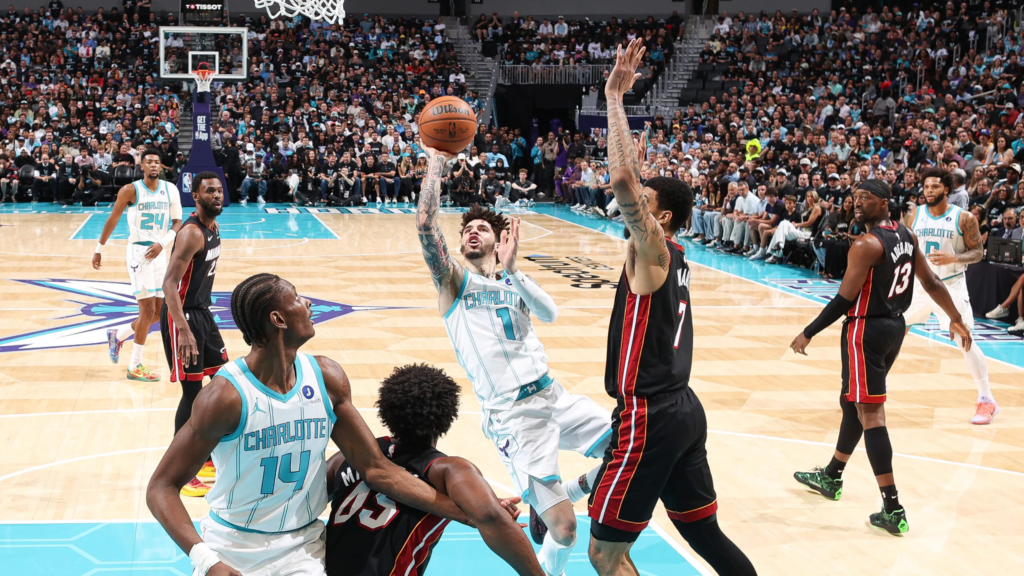

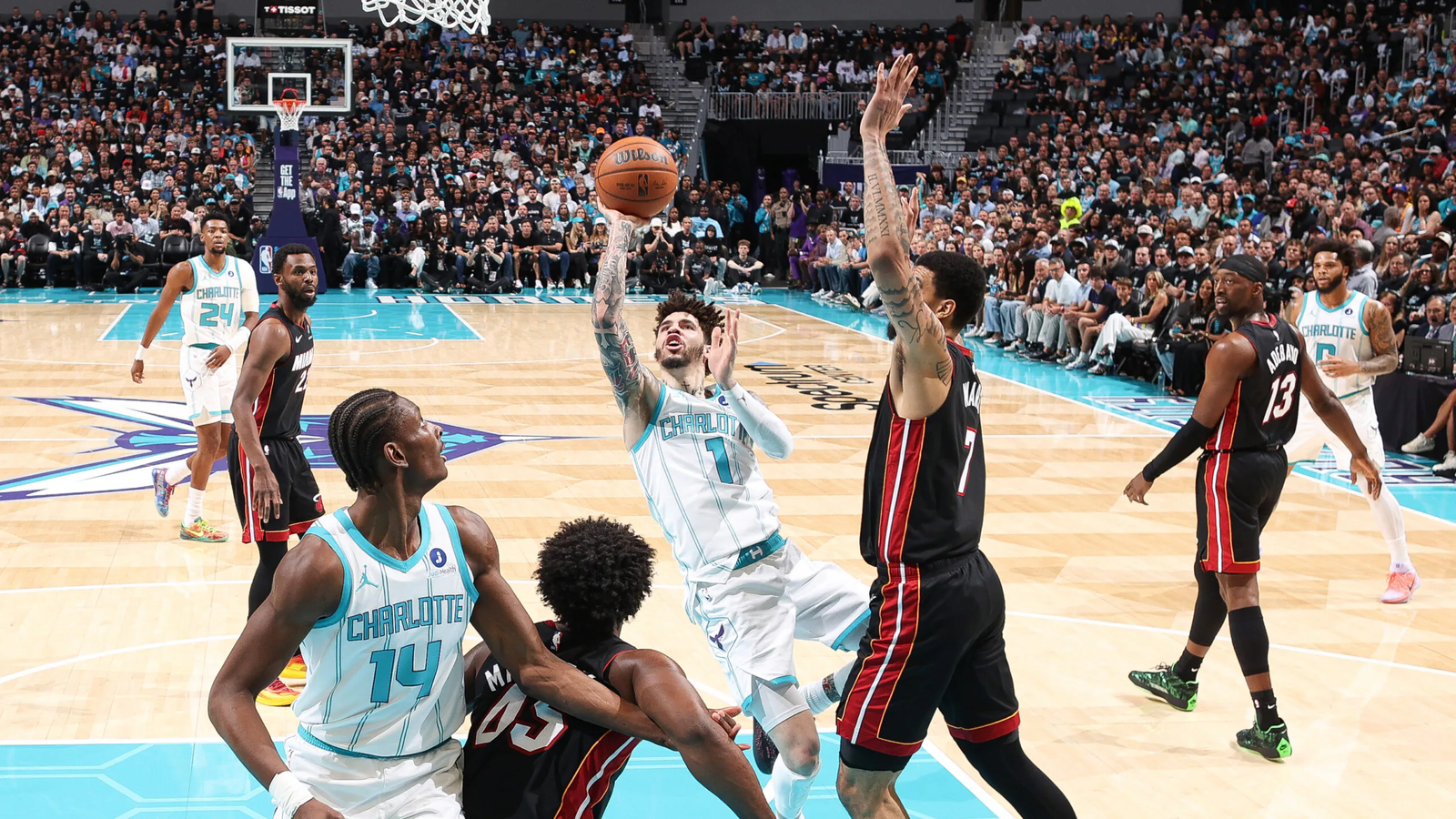
“One Possession, One Season: Play-In Opens with Overtime Drama and Western Upset”
The 2026 NBA Play-In Tournament began with two tightly contested matchups that immediately reinforced the format’s defining trait: there is no margin for error.
Both games on April 14 were decided in the final minutes, including one that required overtime and another that flipped late in the fourth quarter.
Eastern Conference Play-In
Charlotte Hornets 127 Miami Heat 126 (OT)
Charlotte advanced in dramatic fashion, defeating Miami by a single point in overtime in one of the most competitive games of the night.
From the opening quarter, the game was evenly played:
- Charlotte led 22–18 after the first quarter
- Shooting efficiency was nearly identical early (both teams above 45%)
The Hornets’ backcourt, led by LaMelo Ball, controlled tempo late, creating offense in both regulation and overtime through ball movement and shot creation.
Charlotte’s offensive efficiency from three-point range proved important:
- 44% from three (4-of-9 early sample)
Miami, meanwhile, shot efficiently early:
- 53% from the field in the opening stretch
But the difference came in late-game execution.
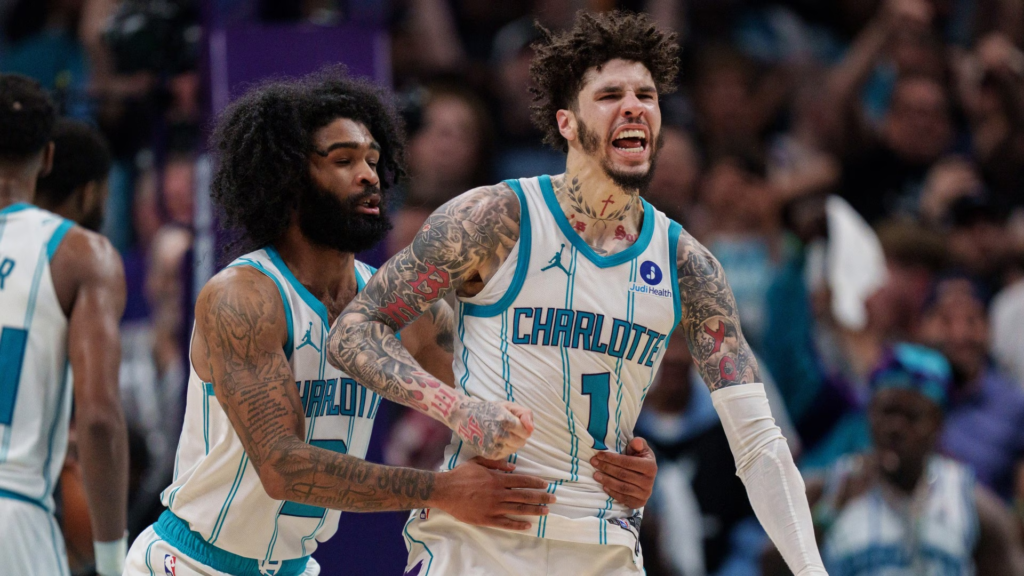
The Heat struggled to generate clean looks in overtime, and despite staying within one possession, they were unable to secure the final stop or score needed to secure the win. As Lamelo Ball was able to hit an game-winner from three to advance the Hornets to the Playoffs.
Western Conference Play-In
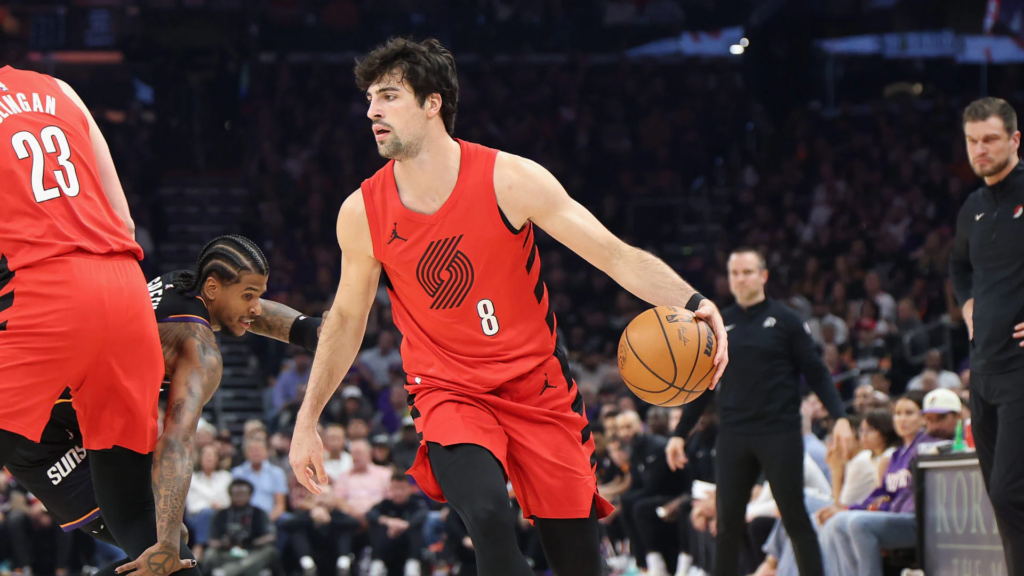
Portland Trail Blazers 114 Phoenix Suns 110
Portland secured the No. 7 seed in the Western Conference with a composed road win over Phoenix. The game was defined by Portland’s offensive rhythm early:
- 31 points in the first quarter
- 32 points in the second quarter
That first-half scoring burst created a cushion Phoenix struggled to fully erase.
Key Performers
Scoot Henderson (Portland)
- 16 points (7–13 FG)
- Controlled pace and contributed efficient scoring
Donovan Clingan (Portland)
- 16 points, 6–10 FG, interior presence
Portland’s ability to score efficiently inside and avoid long droughts offensively was a key difference.
For Phoenix:
Devin Booker (Phoenix)
- Led scoring efforts (team leader in usage and shot attempts)
However, Phoenix struggled from three-point range:
- 3-of-11 from deep (27%)
That lack of perimeter efficiency limited their ability to complete the comeback.
Game-Level Trends
Across both matchups, several patterns were clear:
1. Early Runs Mattered
- Portland’s fast start defined the game
- Charlotte’s early efficiency kept them in control
2. Shooting Efficiency Was Decisive
- Charlotte: strong perimeter shooting
- Phoenix: struggled from three
3. Late Execution Decided Outcomes
- Overtime execution separated Charlotte and Miami
- Phoenix could not convert late possessions
What Comes Next
- The Charlotte Hornets move on and remain alive in the Eastern bracket
- The Portland Trail Blazers secure the No. 7 seed and advance to face the San Antonio Spurs
- The Phoenix Suns now face an elimination game
- Miami’s season ends immediately
The opening night of the Play-In Tournament confirmed what has become increasingly clear in recent years: In both games, the difference between advancing and elimination came down to a handful of possessions. Teams that controlled tempo, protected efficiency, and executed late moved on. Those that didn’t are already heading into the offseason.